

Algae have been feeding life on Earth for billions of years, so it is no surprise they have earned a permanent spot in the modern smoothie. Choosing a blue-green algae supplement isn’t always straightforward. Browse the shelves of a health food shop and you’ll come across a range of names, including spirulina, Hawaiian spirulina, chlorella, blue spirulina and phytoplankton. But what are the differences, are they interchangeable, and does it really matter which one you choose?
The answer: It does matter, and the differences are easier to understand than the labels suggest. In this supergreens guide we will walk you through what each supergreen is, where it comes from, how it tastes and how our customers tend to use it, so you can pick the one that fits your routine.
First, a quick bit of biology
Here is the part that confuses most people: spirulina is technically a type of blue-green algae. Both belong to a group of tiny organisms called cyanobacteria, which make their energy from sunlight just like plants do. That is where the deep blue-green colour comes from, a mix of green chlorophyll and a blue pigment-protein called phycocyanin.
So when you see “blue-green algae” on a shop shelf, including ours, it usually refers to one specific species: Aphanizomenon flos-aquae, better known as AFA. “Spirulina” refers to Arthrospira platensis and its close relatives. Same family, quite different personalities.
What is blue-green algae (AFA)?
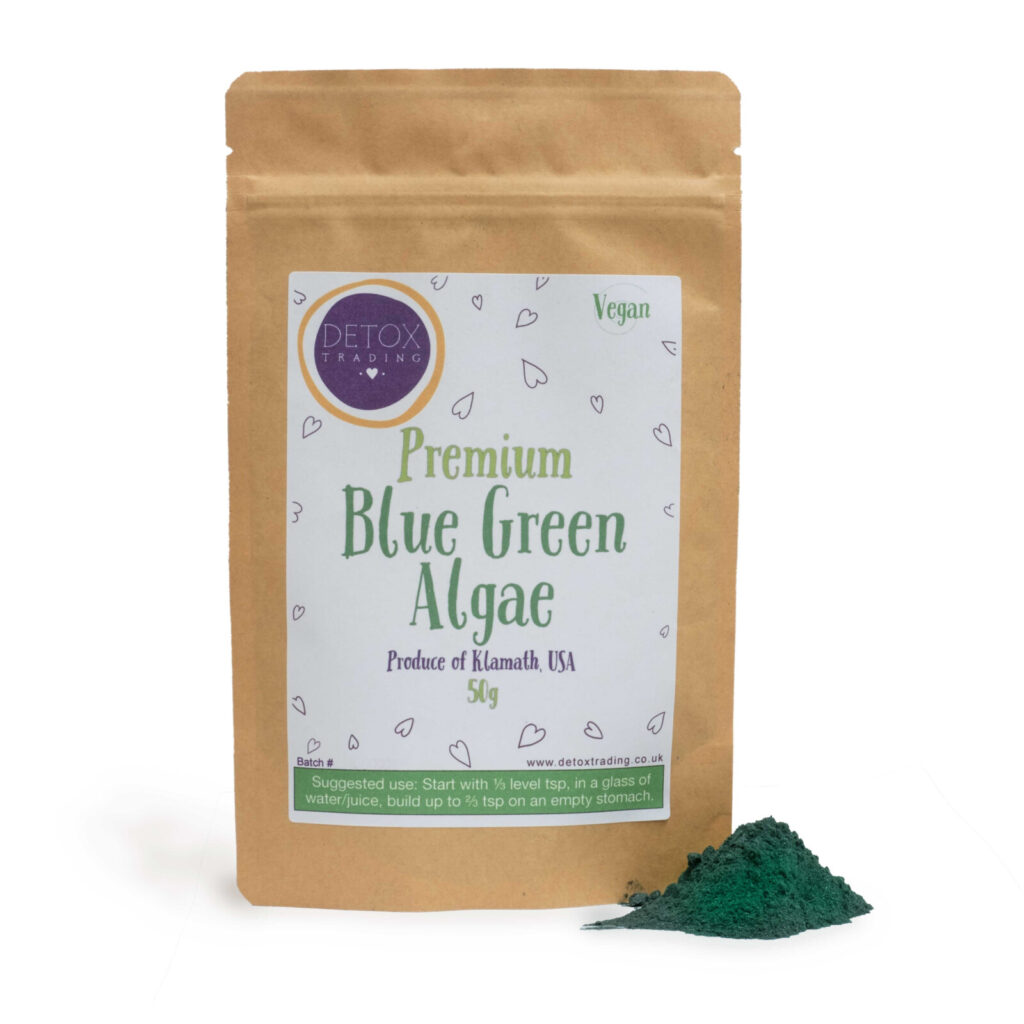
AFA is a wild algae. Our Blue-Green Algae Powder is wild-harvested from Upper Klamath Lake in Oregon, a mineral-rich lake fed by volcanic soils, and then dried using a gentle Refractance Window method designed to protect its colour, taste and nutrients. Because it grows naturally rather than in a pond, every harvest reflects the season and conditions of the lake.
A few things set AFA apart:
- Small servings. AFA is potent stuff. Most people start with around half a gram (a third of a level teaspoon) and build up to about one gram a day.
- Fatty acids. It contains plant-based omega-3 (ALA) and omega-6 (GLA). It does not contain EPA or DHA, the longer-chain omega-3s found in oily fish.
- Timing. Many of our customers like it first thing in the morning, stirred into water or juice on an empty stomach.
If you would rather skip the taste altogether, blue-green algae capsules give you the same Klamath AFA in an easy, pre-measured form.
What is spirulina?
Spirulina is the most famous supergreen supplement of all, and for good reason. Unlike AFA, it is cultivated in carefully managed ponds, which means a consistent product from batch to batch. It is also remarkably rich in protein: our Hawaiian Spirulina Powder contains around 69g of protein per 100g, alongside a natural spread of minerals, antioxidant pigments and amino acids.
Servings are larger than AFA, typically about 3g (roughly a teaspoon) a day. If you are new to it, start with half that and build up over two or three weeks so your body has time to adjust.
There are a few types of spirulina worth knowing about:
- Organic spirulina. Our organic spirulina powder is the everyday all-rounder and the most budget-friendly way to add a daily green boost. Prefer not to taste it? Organic spirulina tablets are a handy option for travel and busy mornings.
- Hawaiian spirulina. Grown in Hawaii in a mineral-rich blend of fresh water and seawater. Although it is no longer USDA certified organic, this is due to a change in organic certification standards relating to one of the minerals used in its production, rather than a change in its growing practices. It is still grown using organic methods and is widely regarded as one of the highest-quality spirulina products in the world.
- Blue spirulina. This is not a different organism. It is phycocyanin, the blue pigment-protein, separated out from spirulina. It has very little taste, so blue spirulina powder is the one to reach for when you want a vivid blue smoothie bowl.
Blue-green algae vs spirulina at a glance
| Blue-green algae (AFA) | Spirulina | |
|---|---|---|
| Species | Aphanizomenon flos-aquae | Arthrospira platensis |
| Source | Wild-harvested, Upper Klamath Lake, Oregon | Cultivated in managed ponds |
| Typical daily serving | 0.5g to 1g | Around 3g |
| Standout feature | Wild, small serving, ALA and GLA | Very high protein, consistent and affordable |
| Taste | Earthy, slightly sweet | Strong, savoury, “seaweedy” |
| Best for | A small, potent morning ritual | Daily smoothies and plant-based protein top-ups |
Where does marine phytoplankton fit in?
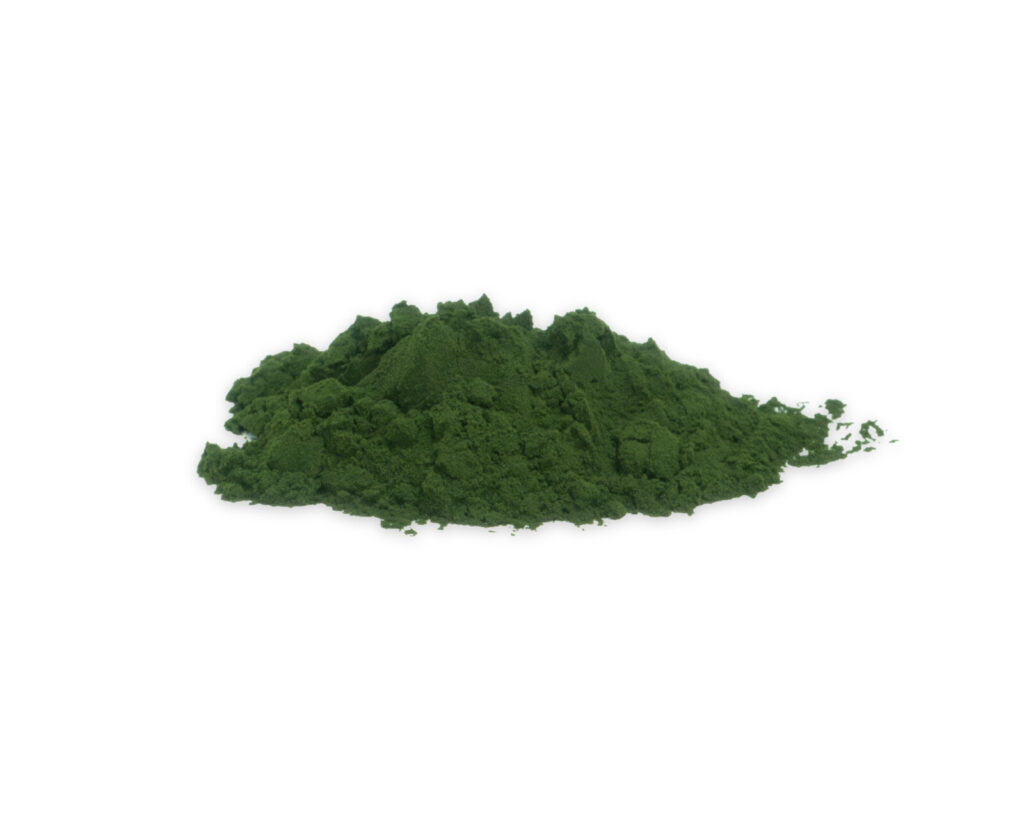
If you are comparing supergreens, marine phytoplankton deserves a mention. These microscopic algae sit at the very bottom of the ocean food chain, and they are where fish get their omega-3s in the first place.
Our freeze-dried marine phytoplankton powder uses Nannochloropsis gaditana, grown in clean aquifer water, and is a natural source of EPA.
That makes it a useful partner to AFA or spirulina rather than a replacement. If you follow a plant-based diet and want a vegan alternative to fish or krill oil, it is well worth a look. Servings are tiny, about 1g a day, and marine phytoplankton capsules are available if you prefer to take it on the go.
So which supergreen is right for you?
There is no single winner here, just the one that suits your lifestyle:
- Choose spirulina if you want an affordable everyday green with plenty of protein, especially if you are active or eating mostly plants.
- Choose blue-green algae if you like the idea of a wild-harvested food and prefer a small, concentrated serving.
- Choose blue spirulina if colour and a mild taste matter most, for example in smoothie bowls and raw treats.
- Add marine phytoplankton if you are looking for a plant-based source of EPA.
Plenty of people rotate between them, or combine a little of each. If you would like the work done for you, our superfood blends bring several greens together in one scoop. You may also want to compare cracked cell wall chlorella, another single-celled green algae with a milder flavour.
How to get supergreens into your day
- Blend spirulina with banana, pineapple and a squeeze of lime. Fruit sweetness softens the savoury notes. Our most amazing breakfast smoothie recipe is a great place to start.
- Stir AFA into a small glass of apple or orange juice and drink it in one go.
- Roll spirulina into raw energy balls with dates, nut butter and cacao.
- Use blue spirulina in chia puddings, overnight oats or a plant milk latte for a hit of colour.
Consistency matters more than quantity. A small daily serving that you actually enjoy will do more for your routine than a heaped spoonful that ends up at the back of the cupboard. For more ideas on gentle, everyday support, have a read of our guide to natural detoxing.
Choosing a quality supergreen
Because algae absorb whatever is in the water around them, where and how they are grown really counts. Look for clear information on origin, drying method and testing, and avoid products padded out with fillers, bulking agents or added sugar. All of the greens in our range are 100% pure, with nothing else added, and we are always happy to answer questions about where they come from.
Please speak to a medical professional first
Supergreens are foods, but they are concentrated ones. If you are pregnant or breastfeeding, taking medication (particularly blood thinners or immune-suppressing drugs), have an autoimmune condition or have phenylketonuria (PKU), please speak to your GP or medical professional before adding algae to your diet. Start with a small serving to see how you get on, and remember that supplements are there to complement a varied, balanced diet and healthy lifestyle, not replace them.
Find the right supergreen for you
Whether you are drawn to wild Klamath AFA, protein-packed Hawaiian spirulina or a vibrant scoop of blue, there is a supergreen to suit you.
Browse our range of supergreens and algae powders and find your favourite, or explore our wider health and wellness supplements to build a routine that works for you. Free UK delivery is available on orders over £60.